
The Long Journey of a Hypermobility Rider: Rebuilding My Position, One Habit at a Time
Updated: Aug 7
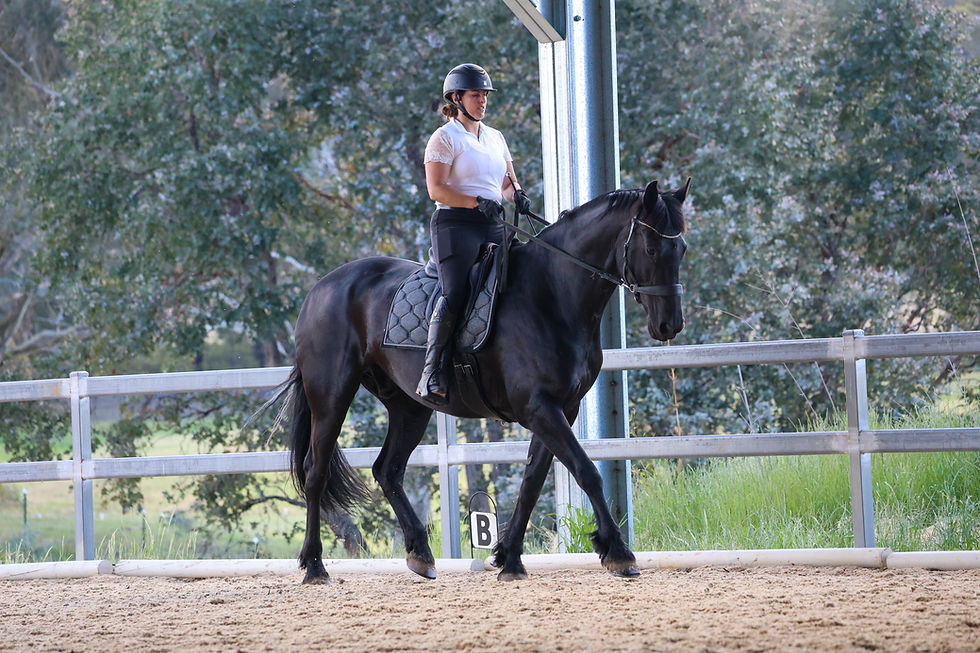
Being a hypermobile rider isn’t just a fun fact about your body—it deeply affects how you ride, how you interpret instructions, how your muscles fire, and how you stabilise yourself in the saddle. My journey has been anything but linear, and even now I’m always improving, refining, and checking in with myself.
This is the story of how I went from struggling to stay balanced, stable, and pain‑free… to finally understanding how my body works and learning how to ride with it, not against it.
How do I know if I am hypermobile? Read this post with tests you can do to work out where you fit.
Where It All Started: My Position Problems in the Saddle
1. The Windscreen‑Wiper Lower Legs
My lower legs swung all over the place—left, right, forward, back… everywhere except where I wanted them.
I tried EVERYTHING: tightening, turning, gripping, focusing harder.
The more I tried, the worse it got. This wasn’t laziness or lack of discipline—it was hypermobility. My joints were too loose for stability, and the more I “tried”, the more my body over‑corrected.
2. Ankle Pain from Forcing ‘Heels Down’
Because I couldn’t stabilise my legs, I subconsciously shoved weight into my stirrups to try and stop the swinging. The result? Intense ankle pain. Hypermobility creates excessive joint motion, so forcing my heels down only collapsed my ankle structure. I wasn’t actually stabilising or allowing the forces to travel through my body—I was bracing.
3. A Sore, Fatigued Lower Back
Because my legs weren’t doing their stabilising job, my lower back took over. Hello stiffness. Hello soreness. Hello being exhausted after even a short ride (oh yeah, the red face, covered in sweat every single day!).
4. The Sit Trot Struggle
Everyone else made it look easy—just “go with the movement”! Meanwhile, I felt like I was sitting on a trampoline made of marbles. Hypermobile bodies often lag behind the horse’s movement because the stabilising muscles don’t fire in time. I bounced, braced, gripped and flopped—take your pick.
5. Toes Turning Outward (and Knee Pain)
Because my hips weren’t stabilising properly, my toes rotated out, my knees gripped, and I literally popped up off the saddle at times. The rubbing on my inside knee… ouch. The frustration of not knowing how to stop it… even worse.
“Just keep your leg still!” – If Only It Were That Simple…
This was one of the hardest parts: Being given cues that made complete sense to neurotypical, non‑hypermobile bodies… but made NO sense to mine.
“Keep your leg still.” Okay, but how? My leg didn’t have the muscular tone or proprioception to simply “stay still”.
I didn’t need will-power. I needed biomechanics.
And most instructors simply weren’t trained to understand hypermobility. They could see the problem—but didn’t know why it was happening or how to fix it.
What Finally Helped: The Turning Point in My Riding
Working with Ann Montgomery – A Biomechanics Coach Who ‘Gets It’
Ann has been—and continues to be—a game changer. Nothing replaces immediate, accurate feedback from someone trained to work with hypermobile riders.
Some of the breakthroughs included:
learning how to rotate my hips correctly
discovering what “inner thigh suction” actually feels like
aligning my pelvis so my legs could stabilise rather than swing
understanding that “tone” doesn’t mean “tense”
learning how to activate muscles that had been asleep for decades
Ann could translate the feeling into a cue I could repeat. That changed everything. This is where my Rider Shopping list entered my "toolkit".
Stopping the ‘Try Hard’ Brain
Hypermobility often comes with poor proprioception—so hyper focusing actually makes things worse. The moment I stopped obsessing about “fixing” my position, my body softened enough to respond to training.
It wasn’t about working harder. It was about working smarter and quieter.
Equipment Matters More than People Realise
Saddle fit, stirrups, stirrup leathers—ALL of it plays a massive role. Because hypermobile joints collapse under pressure, incorrect tack exaggerates instability.
Trust me… I’ve tried everything. Some combinations made my swinging legs 10x worse. Finding the right setup created immediate relief and improved balance. The key is getting a saddle that you get on, and it supports your position with no shifting, fighting to maintain/hold your position, and no readjusting! You can just get on with focussing on the ride.
And no big knee rolls! Seriously, you will never find good posture and balance in the saddle if you rely on knee rolls. I go for monoflaps or anything to reduce the bulk under my seat, thighs and legs (all the lovely parts that make up the 7-point seat).
Bareback Pad Training – The Unexpected Game Changer
Riding in a bareback pad for over six months transformed my seat.
You cannot brace.
You cannot rely on stirrups.
You must stack your body correctly or you simply slide.
With the right guidance (Ann or myself), this becomes:
a masterclass in balance
a way to eliminate gripping
a reset button for your biomechanics
a fast‑track to learning how not to balance through your reins
Understanding Misfiring Muscles
Misfiring glutes =hip instability →leg instability →ankle collapse →pain.
Everything is connected.
Once I retrained my glutes and core to fire correctly, my legs FINALLY stopped swinging.
Off‑Horse Strength Training Became Essential
Hypermobility does not mean “double‑jointed and cool”. It means your body is loose, elastic and lacking structural support.
Stretching wasn’t what I needed.
Strength was.
Functional, rider‑specific strength.
The kind that builds tone without tension. This made the biggest long‑term difference.
Off‑Horse Biomechanical Awareness Exercises
There are many cool exercises you can do off the horse which can identify, help and improve riding postural patterns and mechanics. This is something I don't skimp on either!
It can help check in on how your body is going without the horse's movements blurring our bodies.
A Lifelong Journey — Not a Destination
There is no "quick fix" for hypermobile riders. It is a long-game journey (and will continue to be for as long as you ride).
Even now, I check in with my position regularly (as I am not a perfect rider!). Not obsessively. Not with panic. But with curiosity and intention.
Hypermobility doesn’t get “fixed”.
You learn to manage it.
You build new habits.
You develop your own biomechanical language.
And slowly, your body learns a new way of being in the saddle.
The Best Part Hidden Superpower of Hypermobile Riders?
You cultivate extraordinary feel and timing. You become hyper‑attuned — noticing tiny shifts in your horse and in your own body that others might miss. Soon, you’re responding ahead of the instruction because your body has already adapted to the horse’s movement. You automatically make those adjustments to get the best out of your horse and you. Magic!
That’s when riding starts to feel like a dance — effortless, connected and deeply intuitive.
And not many riders learn this level of feel and intuition. So definitely embrace this rather wonderful perk!
Final Thoughts
My journey as a hypermobile rider has taught me patience, body awareness, and the importance of strength over flexibility. It’s taught me that no cue works for every rider, and that biomechanical training is essential—not optional—for riders like us.
If you’re on your own hypermobility journey, know this: You’re not broken. You’re not untrainable. You simply need the right approach, the right guidance, and the willingness to rebuild from the ground up.
I can definitely help you. Feel free to reach out!


Comments