
Why Your Horse Needs to Load From Either Side of the Float
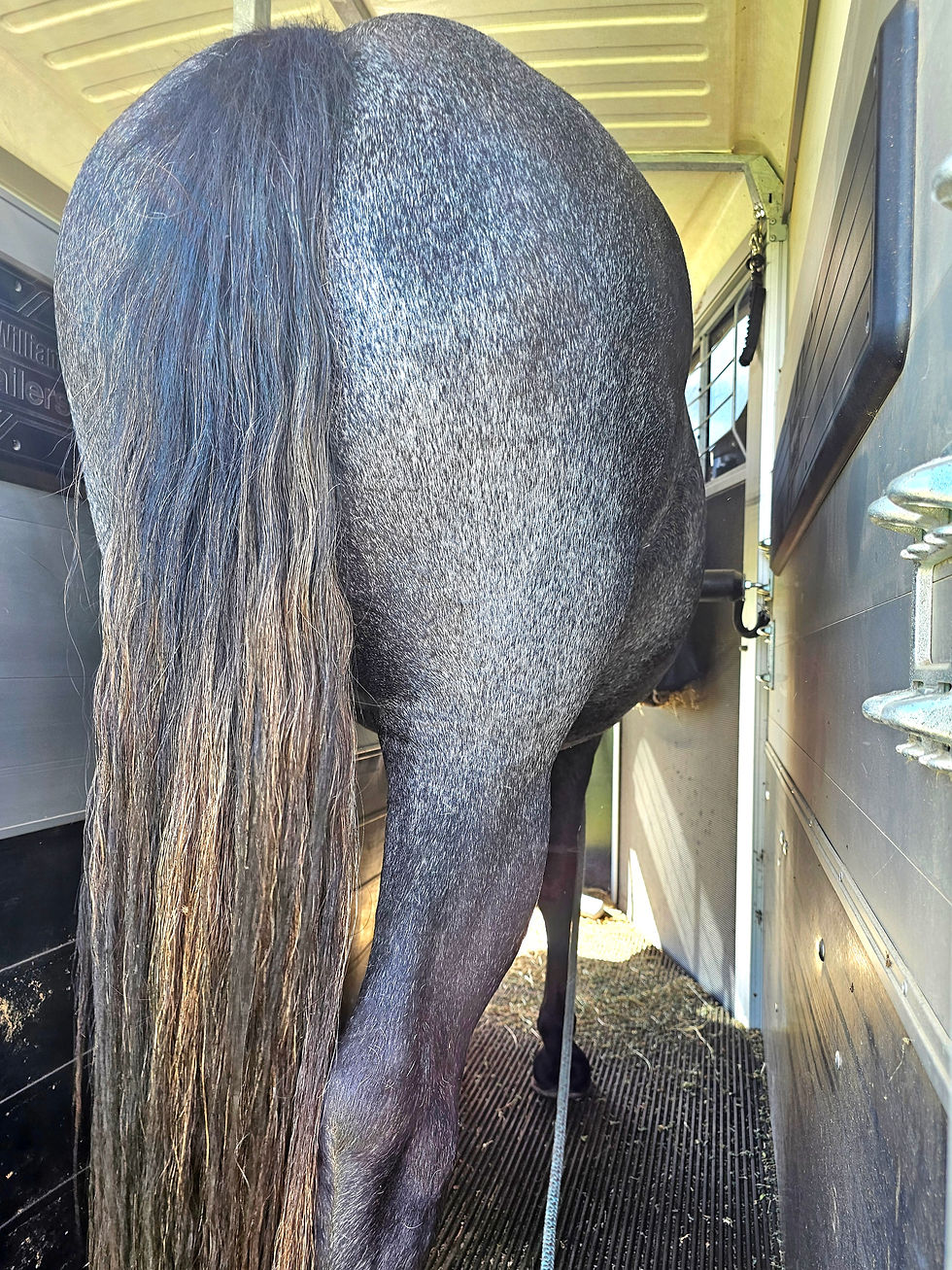
With you on either side of them!
And why leading and casting ahead are only the beginning...
Once your horse confidently leads forward, yields softly, and understands how to cast ahead (moving their feet forward while you stay grounded at their shoulder), it’s tempting to think your float loading education is “done”. After all, they walk straight on, stand quietly, and travel well—what more could you need?
Plenty, as it turns out.
One often overlooked but critically important skill is teaching your horse to load into the float from either side, not just the one they’re used to. This isn’t about clever tricks or perfect training—it’s about safety, practicality, and balanced sensory development.
The picture above is my youngster loaded on the "unfamiliar" bay side in the float, with me standing and casting from his off side (look at where the lead rope is).
Leading First: The Foundation That Makes Everything Else Possible
Before we talk about changing sides, it’s worth reinforcing this key point:
Float loading problems are almost never float problems. They are leading problems in disguise.
If you haven’t already, these two blogs explain why leading and casting ahead are the true foundations of safe float loading:
When a horse can:
Lead softly on a loose line
Stay mentally with the handler
Step forward without rushing or bracing
…float loading becomes a continuation of those skills, not a separate battle.
So Why Load From Both Sides?
Many horses load happily when approached from their “familiar” side (usually the higher roadside > in Australia this is the driver's side or right-hand bay in a straight load float), then fall apart when asked to do the same task from the opposite position. This asymmetry isn’t stubbornness—it’s incomplete education.
1. Emergencies Don’t Give You Ideal Conditions
In a perfect world, you’d always have:
Plenty of space on both sides of your float
Level ground
No traffic
No emergencies (i.e. vet emergency travel visits)
No pressure
Real life is messier.
You might need to load:
Broken down on the side of the road
In a tight car park
At a competition where someone has parked too close on one side
In poor light or unfavourable weather
Vet emergencies
Evacuations or natural disasters
Or someone having to load their horse on your float/truck with your horse!
If your horse has only ever loaded with you on one specific side, your options shrink quickly—and unsafe decisions creep in under stress.
Training both sides gives you choice when you need it most.
2. Horses Are Naturally Asymmetrical
Like people, horses have:
A preferred eye
A dominant ear
A favoured side for processing information
When you always load from the same side, you unintentionally:
Overload one sensory channel (eye–ear–nostril combination)
Avoid educating the other
This can result in a horse that is:
Calm and confident from one side
Tense, reactive, or hesitant from the other
Teaching loading from both sides helps even out sensory processing, improving:
Emotional regulation
Balance
Confidence in unfamiliar environments
Troubleshooting and regulating their nervous system responses
3. Softness Should Exist Everywhere, Not Just One Position
If a horse is truly soft and educated, it shouldn’t matter where the handler is positioned:
Left side
Right side
Slightly ahead
Slightly back
Once leading and casting ahead are solid, loading from either side becomes a powerful test of:
Mental flexibility
Responsiveness rather than habit
True understanding rather than memorisation
Horse's ability to troubleshoot when an object (such as a bum bar) is blocking one side and they have to work out how or where to get on to the float
This is where training replaces reliance on routine.
Why Horses Often Struggle With the “Other Side”
When loading from the unfamiliar side, you might see:
Hesitation or planting
Rushing past the handler
Rushing backwards
Swinging the hindquarters out
Tension through the poll or neck
Physically looking away from the float (horse usually follow where they are looking)
These behaviours usually indicate one thing: the horse doesn’t yet understand the task independent of pattern.
They’ve learned where to go when everything looks familiar—but not how to stay mentally with the handler no matter the picture.
How This Links Back to Leading and Casting Ahead
If your horse can:
Walk forward beside you from either side (basic leading position)
Stay soft through the head and neck
Accept feel on the rope without bracing and responding to this cue or feel
Step ahead of your shoulder when asked
Then loading from both sides becomes a logical progression, not a leap.
This is why revisiting the fundamentals matters—and why the leading blogs linked earlier are such an important starting point.
Practical Takeaways for Owners
You don’t need to rush this process. In fact, slow and correct beats fast and forced every time.
When introducing loading from the opposite side:
Start in a low‑pressure environment
Expect confusion at first
Reward small forward tries
Focus on softness, not speed
Most importantly:
Don’t wait until you’re under pressure to discover your horse can’t do it.
Train for the situation you hope never happens.
Already a Pro at this? Take it to the next level...
So you have mastered float loading with your horse on both bay sides and with you leading/asking from both sides of the horse... here's a couple of challenges for you!
Can you get the horse to load whilst you are jumping up and down on the ramp, or banging the float to make noise?
Can you do this (jumping up and down and making noise) once they've loaded and they stay calm, relaxed and standing quietly in their bay?
What about with all the windows, doors and front ramps shut (so the float is dark and even harder to process?
Dive deeper... why do you think I am asking this? Why would you get a horse to load under these circumstances? Let me know your thoughts in the comments. I'm curious to find out!
Final Thoughts
Teaching your horse to load from either side of the float isn’t about perfection—it’s about preparation.
It gives you:
Greater safety in unpredictable situations
A more mentally balanced horse
Confidence that your horse understands the task, not just the routine
Once leading and casting ahead are truly solid, this step is not only achievable—it’s logical. And it might one day make all the difference when circumstances aren’t on your side.


Comments