
Why Does Your Horse Feel Like Six Different Drunk Horses After Bodywork?
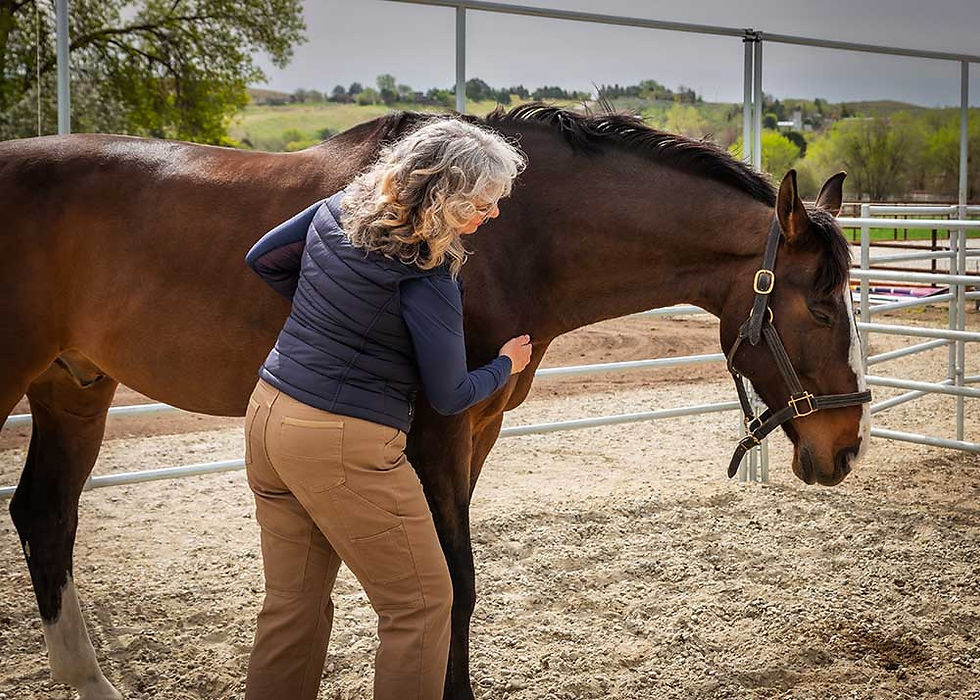
Post-Bodyworker Return-to-Work
You’ve booked the bodyworker, given your horse a couple of rest days, and now you’re ready to ride. But instead of feeling supple and balanced, your horse moves like six different drunk horses in one body. Sound familiar? Here’s why—and what to do about it.
Why It Happens
Bodywork releases tension and restores mobility, but it also changes how your horse feels in its own skin. Muscles that were tight are now freer, and old compensations have shifted. This can leave your horse feeling a little “wobbly” as it learns to move without those restrictions. Think of it like getting a deep massage—you feel great, but also a bit uncoordinated at first.
The Dos and Don’ts of Bringing Your Horse Back to Work
✅ Do: Start Slow
Begin with long, relaxed walks in-hand (not usually lunging) or under saddle.
Focus on straight lines before introducing lateral or circle work.
Ensure you follow the guides/exercises or plan provided by the Bodyworker.
Keep sessions short—20 to 30 minutes is plenty for the first ride back.
✅ Do: Focus on Feel
Encourage rhythm and relaxation rather than precision.
Allow your horse time to explore its new range of motion without pressure.
✅ Do: Incorporate Groundwork
Simple exercises like leading in hand, backing up, and gentle pole work help re-engage the brain and body without overload.
❌ Don’t: Jump Straight Into Collection or High Impact Work
Avoid demanding movements like piaffe, tight circles, or heavy lateral work immediately after bodywork.
Avoid jumping as this is jarring to skeletal and musculature structures that have been adjusted.
Skip high-intensity schooling—your horse needs time to recalibrate.
❌ Don’t: Panic About Awkwardness
Wobbly steps don’t mean something’s wrong. It’s part of the adjustment process.
Pro Tip
Think of this phase as a reset button. Your horse is learning to move without old restrictions, and that takes time. Patience now pays off later with better balance, flexibility, and performance.


Comments